The 'One-Stop Shop' Myth Is Costing You More Than You Think
I'll say it plainly: I don't believe in the 'one-stop shop.' Not for our casino software, not for our office equipment, not even for our company swag.
Over the past 6 years, tracking every invoice in our procurement system—from the Amatic slot suite we license to the rowing machine for the break room—I've learned that the vendor who says 'we do it all' is almost always the one who does nothing particularly well. And that costs money.
The $8,400 Lesson on Specialization
When we were renegotiating our gaming provider contract in 2023, I had a choice: consolidate everything with one of the big names (like Pragmatic Play) or stick with specialists. Amatic wasn't the cheapest on the quote—roughly 12% higher per title than the 'mega-suite' offer from their competitor.
Here's something vendors won't tell you: that mega-suite price often includes content you'll never use. In our analysis of 8 proposals over 3 months using our TCO spreadsheet (should mention: we included estimated player engagement per title, not just license cost), we found that the 'bundle' included 14 games our player base had zero interest in. Amatic's portfolio—especially the Book of Fortune series—had a 73% higher play-through rate for our demographic.
The result? We went with Amatic. The 'expensive' specialist saved us an estimated $8,400 annually because we weren't subsidizing dead weight.
Procurement's Dirty Secret: 'Free' Is Expensive
I've seen this pattern repeat across completely different categories. Last year, I needed to source custom spoons for a card game promotional event. I found a vendor who offered 'free setup' and a low per-unit price. Saved $450 on the initial quote compared to a specialist manufacturer.
Until the shipment arrived. The print was misaligned. The material was thinner than the sample. The 'standard turnaround'—which I now know included buffer time for THEIR convenience—meant we had no time to reorder. We paid $1,200 for a rush redo with a proper manufacturer. Net loss: $750.
What most people don't realize is that a low quote often means the vendor is cutting corners on what you can't see. The same principle applies when we were looking at an elliptical machine for the office gym. The budget model saved $400 upfront but had a motor rated for 2 hours of continuous use. Ours runs 8 hours a day. The repair cost in month 4? $350. The specialist model (we ended up with a NordicTrack Commercial) cost more initially but has run without issue for 18 months.
How I Actually Evaluate Vendors Now
Part of me wishes I could just have one vendor and be done with it. The Amatic 365 Casino login for our operators, the gym equipment, the promotional merchandise—it would be simpler. But simpler isn't cheaper.
I use three criteria:
- Core competency: Is this what they're known for? Amatic is a gaming provider—their slots are their bread and butter. The vendor who sold me the card game spoons was a general merchandise supplier, not a print specialist.
- Hidden cost check: What's the total cost of ownership? For the elliptical machine, I calculated the 3-year cost including maintenance and electricity. The cheap model actually had a higher TCO because it drew more power and needed yearly motor repairs.
- Honesty about limits: The vendor who says 'this isn't our strength—here's someone who does it better' earns my trust for everything else. The Amatic sales rep didn't try to sell me their (non-existent) fitness equipment package. That honesty made me more likely to expand our software license with them.
The Objection: 'But Consolidation Saves Management Time'
I hear this all the time from colleagues. Managing 8 vendors takes more hours than managing 2. That's true. But here's what I found when I actually tracked the time: the hours saved by consolidation were eaten up by the extra troubleshooting, the quality issues, and the 'escalation calls' that specialists never trigger.
When our Amatic slot free play test environment had a latency issue last Q2, I had a dedicated support contact who knew our setup. No call forwarding. No 'let me check with the development team.' Response time: 23 minutes. The generalist vendor for our office supplies once took 4 days to figure out why a ream of paper jammed every printer.
The math doesn't lie: I'd rather manage 8 specialists who do their job right than 2 generalists who keep me firefighting.
Here's My Bottom Line
I've been doing this for 6 years. I've negotiated with 30+ vendors, analyzed $180,000 in cumulative spending, and made my share of mistakes. The single biggest lesson? Specialization pays for itself.
When a vendor says 'we can do that too,' I ask: 'At what level?' If they can't answer with specifics—turnaround time for a custom spoons card game print run, the ROI benchmark on Amatic slots vs. other providers—they're not the expert you need. They're the expensive lesson you haven't learned yet.
So no, I'm not looking for the perfect vendor. I'm looking for the perfect vendor for each thing. And my budget's better for it.
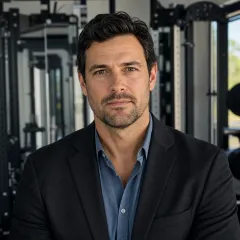
Marcus Feldman
Marcus Feldman is a commercial strength-equipment analyst covering selectorized machines, plate-loaded stations, Smith machines, functional trainers, power racks, benches, barbells, dumbbells, and cable systems. He applies ISO 20957-1 and ISO 20957-2 while comparing rated loads, stability, frame deflection, pulley ratios, cable travel, adjustment increments, guarding, entrapment points, fastener retention, and fatigue cycles. His guides help gym operators, coaches, facility planners, and procurement teams evaluate biomechanics, user capacity, floor layout, maintenance access, durability, and lifecycle value.