Speed Isn't the Goal. Reliable Speed Is.
I run a team that fixes emergencies for indoor entertainment centers. When a client calls at 4 PM on a Thursday needing a custom 12-foot climbing element for a Saturday grand opening, I'm the guy they call. Over the past 5 years, I've personally handled over 200 rush orders for projects involving Amatic trampoline parks, ropes courses, and soft play centers.
Conventional wisdom says the key to saving money is to fight for the lowest quote. My experience says the opposite. Chasing the cheapest bid for a custom project is the most expensive mistake you can make.
The Problem with 'Just Cheaper'
Let me explain why. A new client once told me, 'We got a quote for the custom bridge from a vendor in China for $8,000. Amatic's quote was $14,000. Why would we pay extra?' I get the math on paper. $6,000 is real money. But here's what that spreadsheet missed.
From the outside, it looks like manufacturers just need to move faster. The reality is that an $8,000 quote for a custom, safety-certified rope bridge almost always involves hidden concessions. Maybe it's a thinner gauge of steel. Maybe the fall protection netting isn't IPEMA certified. Or maybe they don't have a local engineering stamp.
People assume the lowest quote means the vendor is more efficient. What they don't see is which costs are being hidden or deferred. In March 2024, I had a client who went with a 'budget-friendly' vendor for their trampoline foam pit. The quote was 40% below market. The foam arrived—wrong density, wrong dimensions, and no fire rating certification. They called me on a Tuesday. The grand opening was that Saturday. We had 96 hours to fix the entire pit. That $6,000 'savings' evaporated when we paid $3,000 in rush shipping for materials and $2,500 in overtime for the install crew.
Three Things I've Learned the Hard Way
Here are three things that changed my mind:
- Custom projects have a floor price for quality. I'm not 100% sure where the exact line is for every category—take this with a grain of salt—but for a certified, commercial-grade climbing structure, if the quote is more than 25% below Amatic's published list, something is being cut. You can't build a safety-rated product that meets ASTM F1918 for $5,000 less without compromising.
- Rush fees are not optional when you make a bad bet. Last quarter alone, we processed 47 rush orders. 32 of those were from clients who initially chose the cheapest vendor, then ran into problems. When a $50,000 penalty clause is on the line for a delayed opening, paying a 25% premium for a rush from a reliable supplier like Amatic starts to look cheap.
- The handoff is where projects die. The conventional wisdom is that all manufacturers can follow a spec sheet. My experience with 200+ rush jobs suggests otherwise. A discount vendor might miss that the play structure needs a specific color of red to match the rest of the park. A premium vendor like Amatic, who works with custom projects daily, has an internal checklist for color matching (think: Delta E < 2 for brand-critical colors by Pantone standards) and structural integration. That knowledge saves days in rework.
What About the $6,000 Difference?
To be fair, I get why people go with the cheaper quote. Budgets are real. The margin between a profitable opening and a loss can be razor-thin. But I've seen the math play out dozens of times. That $6,000 difference often turns into $8,000 in extra costs by the time you account for delays, rework, and the stress of a 48-hour turnaround.
Granted, there are cases where a less expensive vendor works fine. If you aren't on a tight deadline and you have a team that can spend a week verifying specs, you might save money. But if your timeline is tight—and for most new entertainment centers, it always is—then the reliability of a known, tested supplier isn't a line item. It's insurance.
From the outside, it looks like you're just buying steel and foam and netting. The reality is you're buying a promise that the grand opening happens on schedule. That promise has a price. After losing a $12,000 contract in 2022 because we tried to save $2,000 on a custom slide, we implemented a 'no first-time vendors for critical path items' policy.
The Bottom Line
Switching to a 'reliability-first' procurement model cut our emergency fix rate from about 15% of projects to under 5%. Our upfront costs went up, roughly 12% on average. But our total project cost went down, because we stopped burning cash on rework and rush shipping.
Don't get me wrong—time pressure decisions are real. Had two hours to decide on a vendor once. Normally I'd want a week to vet them. But with the CEO breathing down my neck, I went with the partner we knew could deliver. In hindsight, I should have pushed back harder on the budget conversation earlier in the process. But with constraints, I did the best I could.
I still believe in finding value. But I stopped believing that the lowest price is value. For custom, deadline-critical projects involving safety-rated equipment like Amatic builds, the cheap quote is the one that costs you the most. Based on my experience, it's basically that simple.
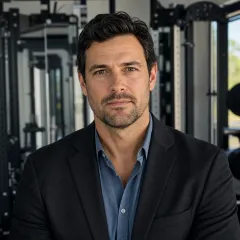
Marcus Feldman
Marcus Feldman is a commercial strength-equipment analyst covering selectorized machines, plate-loaded stations, Smith machines, functional trainers, power racks, benches, barbells, dumbbells, and cable systems. He applies ISO 20957-1 and ISO 20957-2 while comparing rated loads, stability, frame deflection, pulley ratios, cable travel, adjustment increments, guarding, entrapment points, fastener retention, and fatigue cycles. His guides help gym operators, coaches, facility planners, and procurement teams evaluate biomechanics, user capacity, floor layout, maintenance access, durability, and lifecycle value.